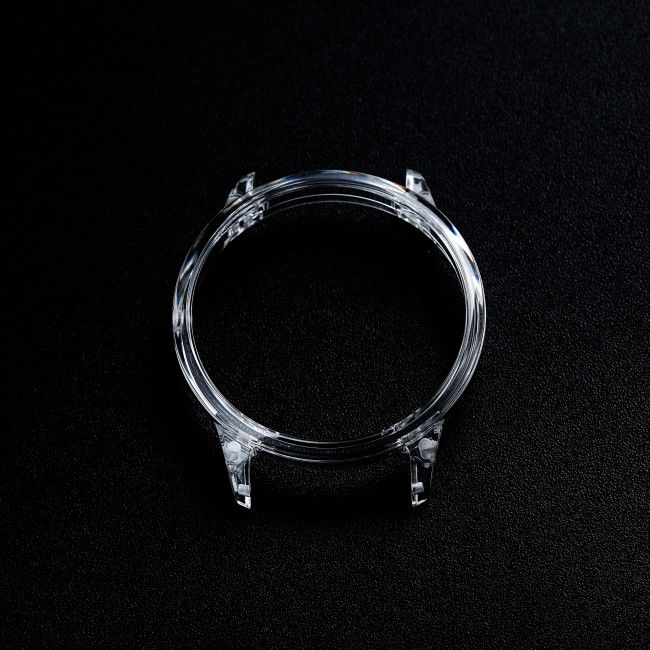
A sapphire watch case does not become transparent simply because the raw crystal is transparent.
After machining, sapphire surfaces are covered with microscopic grinding marks, subsurface damage and surface irregularities that scatter light. Without proper finishing, even high-quality synthetic sapphire can appear cloudy, hazy or uneven.
This is why polishing is one of the most critical stages in sapphire watch case manufacturing.
For a luxury transparent watch case, polishing is not only a cosmetic finishing process.
It is part of the optical manufacturing process.
The quality of polishing directly affects:
- transparency
- movement visibility
- edge brilliance
- internal reflections
- dimensional accuracy
- sealing surfaces
- overall appearance
- manufacturing yield
For watch brands and design teams developing a custom sapphire watch case, polishing requirements should therefore be considered during the original design stage rather than added only after machining is complete.
Why Machined Sapphire Is Not Naturally Clear
Synthetic sapphire is optically transparent in high-quality crystal form.
However, the machining process changes the surface.
Diamond grinding and precision machining leave behind microscopic damage.
This can include:
- grinding scratches
- microcracks
- surface roughness
- subsurface damage
- edge defects
These imperfections scatter incoming light.
Instead of passing cleanly through the material, light is reflected and diffused in different directions.
The result can appear:
- milky
- cloudy
- matte
- hazy
The purpose of polishing is to gradually remove this damaged layer and reduce surface roughness until the sapphire becomes optically clear.
Polishing Is More Than Making the Surface Shiny
A metal watch case can look polished simply because the surface reflects light.
A sapphire watch case is different.
Its surface must support both reflection and transmission.
A high-quality sapphire case should allow light to pass through the material while maintaining clean surface reflections.
The wearer should be able to see the movement through the case without distracting haze.
This means the polishing process needs to control:
- microscopic roughness
- local waviness
- scratch depth
- edge definition
- surface geometry
The objective is not simply “high gloss.”
The real objective is controlled optical clarity.
Rough Grinding Comes Before Fine Polishing
Complex sapphire watch cases normally begin with rough material removal.
The purpose of rough grinding is to create the basic geometry.
This stage may define:
- outer diameter
- case profile
- lugs
- internal cavity
- crown opening
- caseback seat
- screw holes
Rough grinding is relatively aggressive compared with final polishing.
As a result, it can introduce deeper machining damage.
The component cannot move directly from rough grinding to final optical polish.
Intermediate finishing steps are required.
Fine Grinding Reduces Subsurface Damage
Fine grinding gradually reduces the depth of machining damage left by earlier operations.
This is important because polishing alone should not be expected to remove extremely deep defects efficiently.
A controlled finishing sequence typically uses progressively finer abrasive conditions.
Each stage removes damage from the previous stage.
The process may include:
- Rough shaping
- Intermediate grinding
- Fine grinding
- Pre-polishing
- Final optical polishing
The exact sequence depends on:
- geometry
- surface condition
- optical requirement
- dimensional tolerance
If early grinding damage is too deep, final polishing time increases significantly.
This can reduce manufacturing yield.
Subsurface Damage Is a Hidden Problem
A sapphire surface may appear smooth while still containing microscopic damage below the surface.
This is known as subsurface damage.
It can result from aggressive grinding pressure or coarse abrasive processes.
Subsurface damage is important because it can affect:
- final optical clarity
- structural reliability
- crack initiation
- polishing time
For premium watch cases, controlling subsurface damage during machining is therefore just as important as the final polishing step.
Good polishing begins with good grinding.
External Surfaces Are Only Half the Challenge
The outside of a sapphire watch case receives the most obvious visual attention.
External surfaces may include:
- bezel
- side wall
- lug surfaces
- outer crown guard
- caseback exterior
These areas are generally easier to access during polishing.
But transparent watch cases introduce another major challenge.
The internal surfaces are also visible.
This means the inner cavity must also achieve a high level of optical finish.
Internal Surface Polishing Is Critical
A metal watch case can hide its internal machining marks.
A sapphire watch case cannot.
Through a transparent case wall, the wearer may see:
- internal shoulders
- movement pockets
- lug interiors
- crown openings
- gasket areas
- structural recesses
If these surfaces remain rough, they can reduce overall transparency.
They may also create distracting reflections.
For skeleton watches and tourbillon watches, internal optical quality can be just as important as the exterior.
Internal Cavities Are Much Harder to Polish
Internal surfaces are difficult because polishing tools need physical access.
A deep internal cavity may be relatively easy to machine with CNC equipment but much more difficult to polish.
The difficulty increases when the geometry contains:
- narrow openings
- deep recesses
- small internal radii
- concave surfaces
- undercuts
A polishing tool may not be able to reach the surface at the correct angle.
This can create uneven finishing.
For this reason, polishing accessibility should be reviewed during CAD design.
Design for Polishing Accessibility
Before the case geometry is finalized, designers should ask:
Can every visible sapphire surface be polished?
This question is especially important for:
- deep internal pockets
- narrow channels
- lug interiors
- curved side walls
- crown-guard recesses
- concave transitions
A surface that cannot be reached reliably may remain hazy.
Increasing access slightly can make the difference between a visually acceptable prototype and a rejected component.
Complex Curves Increase Polishing Difficulty
Curved sapphire surfaces require more control than flat surfaces.
Examples include:
- tonneau profiles
- domed side walls
- wave-shaped cases
- sculpted lugs
- compound curves
The polishing tool must maintain consistent contact across a continuously changing surface.
If pressure varies too much, the surface can become uneven.
This can create optical distortion or local waviness.
The problem becomes more challenging when the curve changes direction across the same surface.
Optical Distortion Can Be Introduced During Polishing
Polishing removes material.
If removal is not uniform, the geometry can change.
For transparent watch cases, this may create optical distortion.
The wearer may see movement components appear:
- enlarged
- shifted
- stretched
- compressed
Some distortion is caused naturally by sapphire geometry and refractive index.
But poor polishing can add additional unwanted distortion.
This is why dimensional control must continue throughout the finishing process.
Polishing Changes Dimensions
One of the most important manufacturing considerations is that polishing removes material.
The final part dimension is therefore not exactly the same as the machined dimension.
This matters for critical features such as:
- movement pockets
- bezel fits
- caseback interfaces
- gasket seats
- sealing surfaces
- screw locations
If polishing allowance is not included in the manufacturing plan, final dimensions may fall outside tolerance.
The machining stage must therefore leave controlled allowance for finishing.
Optical Surfaces and Functional Surfaces Are Different
Not every sapphire surface should be treated in exactly the same way.
A watch case may contain:
Optical Surfaces
These areas require excellent transparency and visual consistency.
Decorative Surfaces
These areas may emphasize reflections, chamfers or aesthetic finishing.
Functional Surfaces
These areas control fit, alignment or assembly.
Sealing Surfaces
These areas require flatness and dimensional stability.
The engineering drawing should clearly distinguish these surface types.
This helps prevent excessive polishing on functional features.
Surface Flatness Matters for Casebacks and Bezels
A surface can be optically polished but still fail functionally if it is not sufficiently flat.
Caseback and bezel interfaces often require controlled flatness.
If polishing creates local waviness, the gasket may compress unevenly.
This can affect water resistance.
Therefore, sealing surfaces need to balance:
- smoothness
- flatness
- dimensional accuracy
- polishing quality
High gloss alone is not enough.
Internal Surface Haze Can Reduce Movement Visibility
Skeleton watches depend heavily on internal visibility.
Even minor haze on the inside of the sapphire wall can reduce the clarity of the movement.
This problem may be especially noticeable around:
- tourbillon cages
- polished bridges
- metallic gears
- high-contrast movement structures
Internal haze can make a premium mechanical movement appear less sharp.
For this reason, optical inspection should include the view through the complete case wall rather than only individual surface inspection.
Edge Quality Is Extremely Important
Edges are some of the most visually sensitive areas of sapphire.
Poor edge quality may include:
- chips
- microchips
- scratches
- uneven chamfers
- rounded facet boundaries
These defects can affect both appearance and structural reliability.
A premium sapphire watch case should have controlled edge geometry.
Sharp Edges Look Precise but Increase Risk
A perfectly sharp sapphire edge can appear visually impressive.
However, sharp edges are also more vulnerable to chipping.
This creates a design tradeoff.
A small controlled chamfer or radius can improve durability while maintaining a precise appearance.
The correct edge treatment depends on:
- case geometry
- visual design
- handling requirements
- assembly process
Chamfers Can Improve Both Durability and Appearance
A polished chamfer can serve two purposes.
First, it protects the main edge.
Second, it creates a bright optical highlight.
In transparent sapphire cases, chamfers can become important design elements.
They may enhance:
- bezel definition
- lug geometry
- case side reflections
- crown opening appearance
However, more chamfers mean more polishing operations.
Complex faceting therefore increases both labor and inspection requirements.
Maintaining Sharp Facet Boundaries Is Difficult
Highly faceted sapphire watch cases depend on precise transitions between polished surfaces.
During polishing, these boundaries can become rounded.
If too much material is removed, the original geometry may lose definition.
This is especially important for:
- angular cases
- polygonal bezels
- complex lug surfaces
- architectural sapphire cases
The manufacturer must control both surface finish and geometric edge definition.
Polishing Accessibility Affects Manufacturing Yield
A difficult surface does not only increase polishing time.
It also increases the risk of rejection.
For example, a deep internal corner may require extensive manual finishing.
If the result remains uneven, the component may fail optical inspection.
This means poor polishing accessibility directly reduces yield.
A small CAD design improvement can therefore have a major impact on production cost.
Polishing Time Can Become a Major Cost Driver
The cost of a sapphire watch case is not determined only by crystal material and CNC machining.
Polishing can consume a large percentage of total production time.
This is especially true for:
- freeform surfaces
- monobloc cases
- deep cavities
- integrated lugs
- multiple facets
The more surfaces that require optical finish, the more time the case requires.
This is why complex sapphire cases are significantly more expensive than simple sapphire windows or flat watch crystals.
Manufacturing Yield Is Critical
Yield refers to the percentage of manufactured components that successfully meet specification.
Sapphire case manufacturing often involves substantial processing time before final inspection.
A component may already have completed:
- rough machining
- fine grinding
- drilling
- polishing
before a final defect is discovered.
Late-stage rejection is especially expensive.
Potential causes include:
- deep scratches
- edge chips
- dimensional error
- optical haze
- polishing distortion
- crystal defects
Yield therefore has a major effect on final production cost.
Polishing Can Reveal Earlier Defects
Some defects may not be obvious immediately after rough machining.
As the sapphire becomes more transparent, hidden imperfections may become visible.
These can include:
- internal crystal defects
- deep grinding damage
- localized stress marks
- subsurface cracks
This is one reason raw material inspection and process control are important from the beginning.
Final polishing cannot always correct defects introduced much earlier.
Crystal Quality Influences Final Appearance
High-quality polishing cannot compensate for poor raw sapphire.
The crystal blank itself should be evaluated for:
- inclusions
- bubbles
- internal defects
- color uniformity
- structural quality
Transparent luxury watch cases require much larger defect-free volumes than simple watch crystals.
This makes raw material selection particularly important for monobloc cases.
Colored Sapphire Adds Another Challenge
Colored sapphire can make polishing defects more noticeable.
Haze or uneven surfaces may affect how the color appears.
Wall thickness also changes perceived saturation.
For colored sapphire cases, polishing quality influences both:
- transparency
- color consistency
A poorly finished royal-blue sapphire surface may appear darker or less clear than intended.
Clear Sapphire Is More Forgiving Visually, but Not Technically
Clear sapphire may hide some color variation, but optical defects remain visible.
Scratches and internal haze can stand out because the case is expected to be extremely transparent.
For premium clear cases, the visual requirement can therefore be extremely demanding.
Polishing Must Be Matched to Case Geometry
There is no single polishing method suitable for every watch case.
The process may vary based on:
- surface shape
- cavity depth
- case size
- wall thickness
- edge geometry
Flat surfaces can use one type of polishing approach.
Curved or concave surfaces may require different tools and fixtures.
Complex monobloc cases may require a combination of machine polishing and controlled manual finishing.
Fixtures Matter During Polishing
The component must be held securely while it is polished.
But sapphire is brittle.
Excessive clamping pressure can create stress.
Poor fixturing can also allow movement during polishing, which affects:
- flatness
- geometry
- surface consistency
For complex cases, custom fixtures may be required.
The fixture must provide enough stability without damaging the sapphire.
Cleanliness Is Critical During Final Polishing
A single coarse abrasive particle introduced during a fine polishing stage can create a deep scratch.
This may require significant rework.
Therefore, polishing environments should control:
- abrasive contamination
- tool cleanliness
- workpiece cleaning
- handling
Final optical surfaces should also be protected during subsequent assembly steps.
A perfect polished surface can still be damaged after polishing.
Handling After Polishing Matters
Finished sapphire should be treated as an optical component.
Careless handling can cause:
- scratches
- fingerprints
- edge chips
- contamination
Protective handling procedures should continue through:
- inspection
- cleaning
- packaging
- assembly
This is especially important for high-end transparent cases where every visible surface matters.
Optical Inspection Should Use Multiple Lighting Conditions
A sapphire case may look perfect under one lighting condition and reveal defects under another.
Optical inspection should therefore consider:
- direct lighting
- reflected lighting
- dark background
- bright background
- multiple viewing angles
Different lighting can reveal:
- scratches
- haze
- distortion
- edge defects
Inspection should simulate the way the finished watch may be viewed in real use.
Dimensional Inspection Is Still Required After Polishing
Visual inspection alone is not sufficient.
After polishing, critical dimensions should be verified.
These may include:
- case diameter
- movement pocket
- caseback seat
- gasket groove
- hole positions
- bezel fit
This confirms that the finishing process has not changed functional geometry beyond tolerance.
Final Assembly Can Expose Hidden Problems
A polished sapphire case may pass standalone inspection but still reveal issues during assembly.
Examples include:
- movement misalignment
- uneven caseback fit
- gasket compression problems
- screw-loading imbalance
- optical interference
Trial assembly is therefore an important part of prototype validation.
How Complex Geometry Affects Yield
A simple round case has fewer surfaces and fewer edge transitions.
A complex sapphire case may include:
- integrated lugs
- deep internal pockets
- multiple facet transitions
- curved crown guards
- narrow polishing areas
Each additional feature creates another opportunity for error.
This explains why production yield typically decreases as geometry becomes more complex.
Design Changes Can Improve Yield
Small design changes can sometimes improve polishing results significantly.
Examples include:
- increasing an internal radius
- opening a narrow polishing access area
- reducing unnecessary undercuts
- simplifying facet transitions
- increasing edge chamfer size
These changes may have minimal visual impact but substantial manufacturing benefit.
When Should a Surface Be Left Matte?
Not every sapphire surface must always be optically polished.
In some designs, controlled matte or frosted regions may be used intentionally.
This can create contrast between:
- transparent areas
- decorative areas
- hidden structural areas
However, the effect should be intentional.
Unplanned haze is a defect.
Intentional texture is a design feature.
Recommended Polishing Development Workflow
A practical sapphire watch case development process may include:
1. Define Surface Requirements
Identify optical, decorative, functional and sealing surfaces.
2. Review Polishing Accessibility
Confirm that every required surface can be reached.
3. Define Machining Allowance
Leave controlled material for final finishing.
4. Perform Rough Machining
Create the main geometry.
5. Fine Grind the Surfaces
Reduce machining damage.
6. Pre-Polish
Prepare the surface for final optical finishing.
7. Final Polish
Achieve the target clarity and appearance.
8. Inspect Optically
Check haze, scratches, edge quality and distortion.
9. Inspect Dimensionally
Verify critical dimensions after polishing.
10. Trial Assemble
Confirm fit, sealing and overall appearance.
Information to Include in a Sapphire Case Drawing
For polishing-sensitive components, the engineering drawing should clearly identify:
- surfaces requiring optical polish
- surfaces requiring decorative polish
- sealing surfaces
- critical dimensions
- flatness requirements
- edge chamfers
- edge radii
- internal polished regions
This prevents ambiguity during manufacturing.
What Determines Final Manufacturing Yield?
Final yield is affected by the complete process.
Important factors include:
- crystal quality
- case geometry
- grinding strategy
- subsurface damage
- polishing accessibility
- edge design
- dimensional tolerance
- handling
- inspection standards
Polishing quality cannot be isolated from the rest of the manufacturing process.
High yield comes from good design and controlled processing from the beginning.
Conclusion
Polishing is one of the most important stages in custom sapphire watch case manufacturing.
The process determines far more than surface appearance.
It affects:
- optical clarity
- movement visibility
- edge brilliance
- dimensional accuracy
- sealing performance
- manufacturing yield
For transparent watch cases, internal surfaces matter almost as much as external surfaces.
A case that is beautifully polished outside but hazy inside will not deliver the intended visual effect.
Complex geometry creates additional difficulty because every visible surface must remain accessible during finishing.
The most successful designs therefore consider polishing before CNC machining begins.
The key question is not simply:
“Can this sapphire case be machined?”
It is:
“Can every visible and functional surface be machined, polished and inspected to the required quality?”
That distinction has a direct impact on optical performance, production cost and final yield.
Custom Sapphire Watch Case Polishing and Manufacturing
We support custom sapphire watch case manufacturing for watch brands, independent watchmakers and design teams.
Available options can include:
- clear sapphire watch cases
- colored sapphire watch cases
- monobloc sapphire cases
- multi-part sapphire cases
- polished sapphire bezels
- sapphire casebacks
- integrated-lug sapphire cases
- skeleton watch cases
- tourbillon watch cases
- prototype development
- small-batch production
Technical review can include:
- polishing accessibility
- internal surface design
- edge quality
- machining allowance
- critical tolerances
- sealing surfaces
- optical inspection requirements
For a custom project, send us your 2D drawing, 3D STEP file, sapphire color, required polished surfaces and estimated quantity for technical evaluation.
FAQ
Why does machined sapphire look cloudy before polishing?
Grinding creates microscopic roughness and subsurface damage that scatter light. Polishing removes this damaged layer and improves optical transmission.
Do internal surfaces of a sapphire watch case need polishing?
Yes, especially for skeleton and transparent watches. Rough internal surfaces can create haze and reduce movement visibility.
Can polishing change the dimensions of a sapphire case?
Yes. Polishing removes material, so machining allowance and final dimensional inspection are important for critical functional surfaces.
Why are complex sapphire cases more expensive to polish?
Curved surfaces, deep cavities, integrated lugs and small internal radii are harder to reach and require more finishing operations.
Why are edge chamfers important?
Controlled chamfers can reduce chipping risk while also creating attractive optical highlights around the case.
Can a sapphire case be transparent without optical polishing?
Not to a premium watchmaking standard. Machined sapphire normally requires fine grinding and polishing to achieve high clarity.
What affects sapphire watch case manufacturing yield?
Yield depends on crystal quality, machining damage, geometry, polishing accessibility, dimensional tolerance, edge quality and handling throughout the process.