Exceptional scratch resistance
At Mohs 9, sapphire resists everyday surface wear far better than conventional mineral glass, helping polished case surfaces retain their clarity.
Specialist manufacturer of custom sapphire watch cases
We focus on clear and colored sapphire watch cases for luxury brands and independent watchmakers. From monobloc to multi-part structures, every case is developed around the movement, assembly method, visible surfaces and your production requirements.
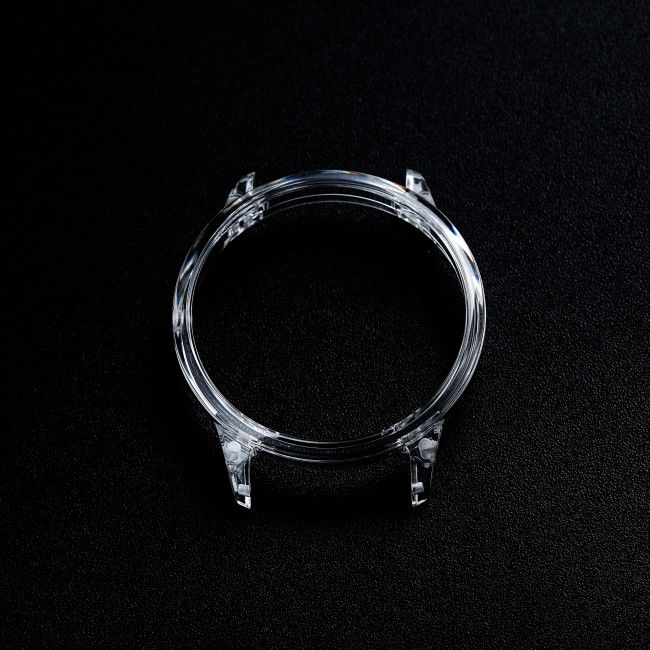
Why sapphire for a watch case
Synthetic single-crystal sapphire combines optical transparency, high hardness and long-term surface stability—turning the case into part of the movement display.
At Mohs 9, sapphire resists everyday surface wear far better than conventional mineral glass, helping polished case surfaces retain their clarity.
Unlike metal or opaque ceramic, sapphire can reveal the movement from the sides, lugs and back—not only through a top crystal.
Polished walls, curved transitions and internal reflections create a dimensional appearance that changes with light and viewing angle.
Single-crystal alumina offers excellent resistance to corrosion and most normal wear environments, without a plated surface that can wear through.
Sapphire maintains its material integrity across temperature changes encountered in normal watch use and precision manufacturing processes.
Clear, sea blue, royal blue and selected custom color directions can make the case itself part of a brand's visual identity.
Engineering note: high hardness does not mean impact-proof. Sapphire is a brittle crystal, so radii, wall transitions, holes, edge protection and assembly loads must be designed carefully.
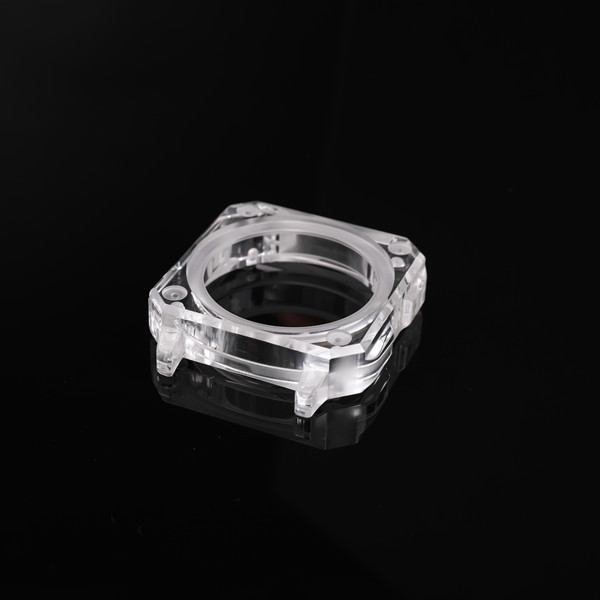
Sapphire-case engineering
Complex sapphire parts demand an integrated review of crystal orientation, wall thickness, corner radii, tool access, polishing sequence, hole geometry and mating-part tolerances. Our engineering discussion starts before the first blank is cut.
Sapphire watch case portfolio
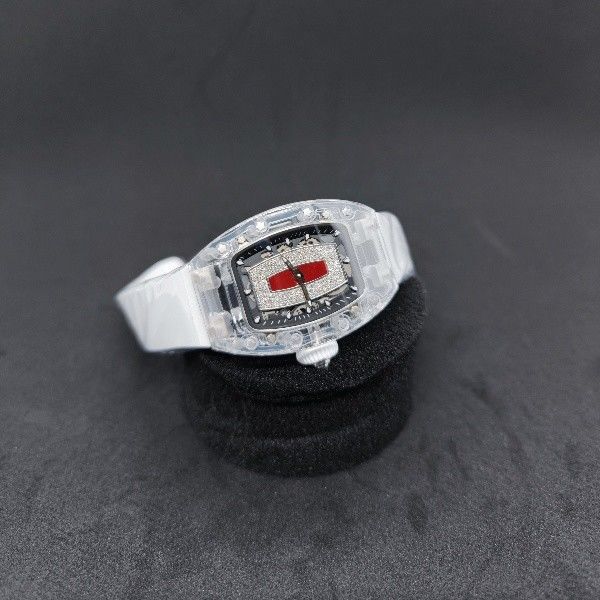
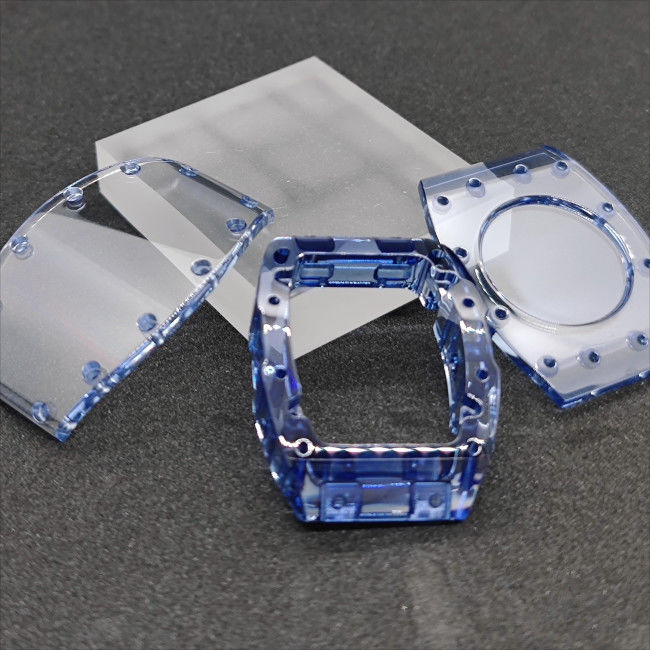
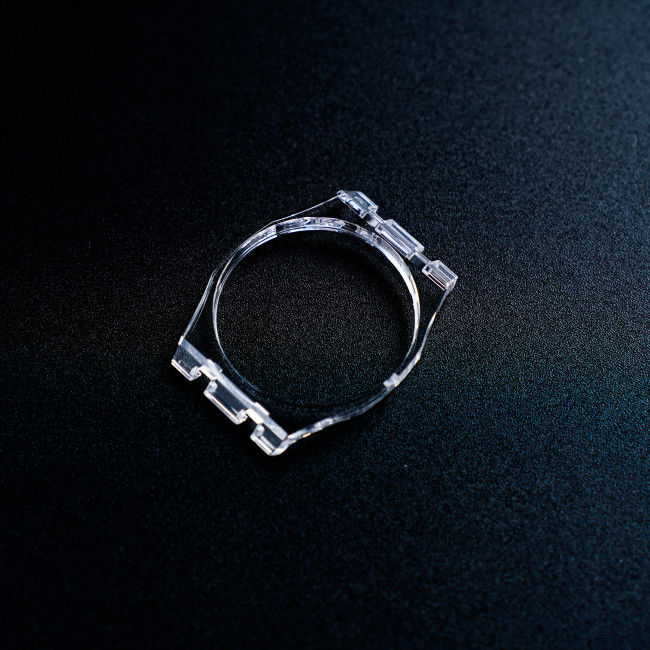
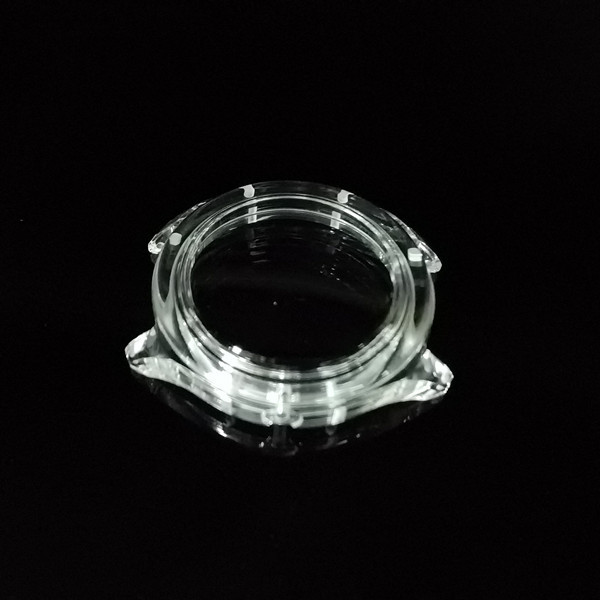
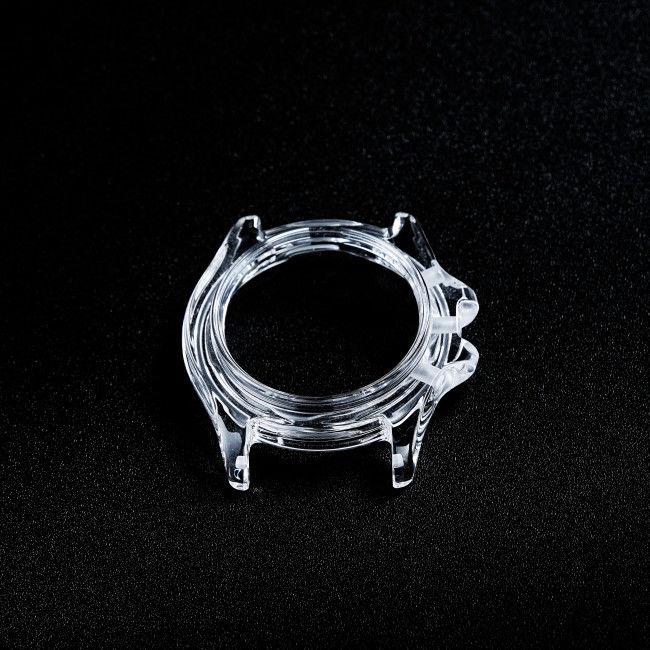
Case structures
Every watch case begins with the movement and assembly strategy. Color is selected after the structural concept is proven feasible.
One-piece case bodies that maximize visual continuity around the movement.
→ 02Coordinated case middle, bezel and back structures for controlled assembly.
→ 03Classic circular architectures with engineered crown, lug and movement interfaces.
→ 04Tonneau, rectangular and free-form profiles for distinctive watch concepts.
→ 05Custom cavities and interfaces developed around your complete movement stack.
→Material comparison
The best material depends on the design goal. Sapphire is selected when transparency, scratch resistance and long-term visual quality are central to the watch.
| Design factor | Sapphire | Mineral glass | Stainless steel | Zirconia ceramic |
|---|---|---|---|---|
| Visual character | Transparent, optical depth | Transparent, commonly used as a crystal | Opaque, metallic | Opaque, ceramic depth |
| Scratch resistance | Exceptional, Mohs 9 | Moderate | Finish-dependent | High |
| Movement visibility | Through the complete case architecture | Usually limited to a window | Not transparent | Not transparent |
| Corrosion stability | Excellent | Good | High, alloy-dependent | Excellent |
| Engineering reality | Hard and brittle; geometry is critical | Lower structural ambition | Mature machining route | Hard and brittle |
Project workflow
Each stage closes a different risk: feasibility, geometry, surface quality, assembly fit and final protection.
2D drawings, STEP files, samples, movement envelope and cosmetic intent.
Machining access, radii, wall transitions, tolerance stack and edge-risk review.
Material route, machining, grinding and staged polishing for sample validation.
Dimensional, cosmetic and assembly checks against agreed acceptance criteria.
Controlled batch manufacture, final inspection and protective export packaging.
Sapphire case expression
Color feasibility varies with part volume, geometry, wall thickness and optical expectations. Final appearance is confirmed through project samples.
Maximum visual openness for skeleton and exhibition architectures.
A bright, contemporary color direction for distinctive case structures.
Deeper saturation for bold limited editions and statement designs.
Pink, red, amber and project-specific color directions subject to feasibility.